



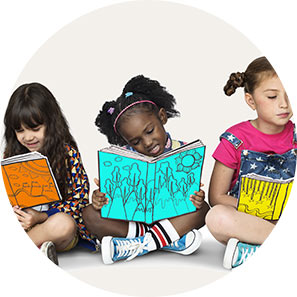
British Curriculum Adapted Locally
Our curriculum follows the Early Years Foundation Stage (EYFS) from the UK and transitions into the UK National Curriculum from age 6, adapted with cultural relevance and specialization.
Inclusion of Local Values
We work to instill cultural and religious identity in the hearts of our children through: Arabic language instruction, Islamic education lessons, Participation in Saudi National and Cultural Events, All within a safe, loving, and inclusive learning environment.
Evidence-Based Practices
We employ global best practices, such as: Tracking the Development of Developmental skills, Learning through guided and structured play, Involving families at every stage of education and intervention
Early Years Foundation Stage (EYFS) – Ages 3 to 5 years old
Learning and Development (EYFS)
The basic principles at this stage are based on seven periods of growth and learning:
- Communication and Language
- Personal, Social and Emotional Development
- Physical Development
- Literacy
- Mathematics
- Understanding the World
- Expressive Arts and Design
- Implement personalised learning approaches
- Promote positive social interactions and teach social skills explicitly
- Adapt the learning environment to minimise sensory overload (e.g., noise, bright lights)
- Integrate sensory activities and tools throughout the curriculum
Cultural Sensitivity and Islamic Values:
This curriculum is designed to be deeply sensitive to Saudi culture and Islamic teachings. All materials and activities will be carefully selected, adapted, or created to align with these values, promoting respect, understanding, and positive character development rooted in Islamic ethics. Where appropriate, links to relevant cultural stories, poems, and themes that resonate with Islamic principles will be explored thoughtfully and respectfully.
Assessment Adaptations for ASC Learners:
We understand that traditional assessment methods may not be suitable for all children, so we offer alternatives such as:
- Visual or audio formats for activities
- Diverse response methods: such as speaking, drawing, pointing, or using technology
- Consider sensory stimuli during assessment
- Provide extra time when needed
- Break large tasks into smaller chunks
- Focus on the child’s individual development, not comparing their performance to their peers
- Provide consistent positive reinforcement to encourage the child and build their self-confidence
Supportive Communication Tools:
We support communication strategies using a variety of symbolic and visual materials, such as:
- Picture cards
- Picture exchange communication system (PECS)
- Sign symbols and visual cues
The core components of our academic curriculum will be based upon a personalised approach towards the adoption of The Department for Education (England) owned Early Years Foundation Stage and National Curriculum.
 English
  العربية